The Text After the Party: Why the Follow-Up Is Where Friendship Begins

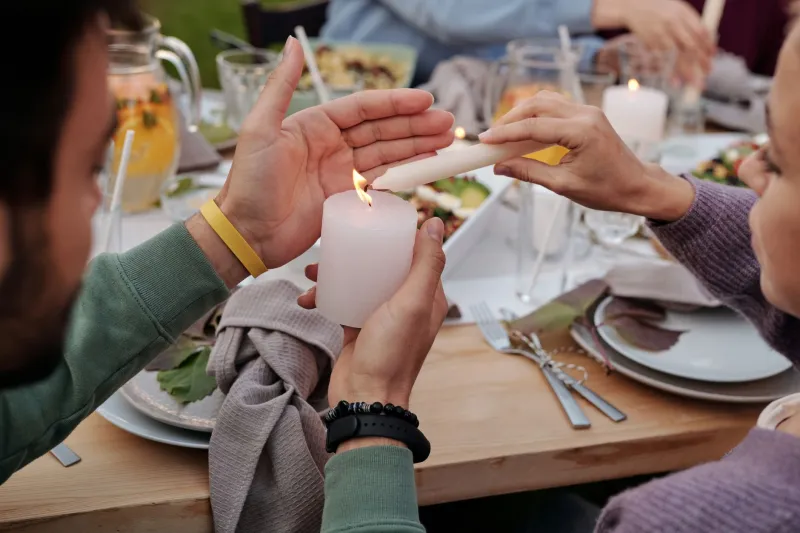
Photo by Photo by Vitaly Gariev on Unsplash on Unsplash
Your guests have gone home. The glasses are in the sink, the chairs are pushed back, and someone has left a scarf on the coat rack. The gathering is technically over. But the part that turns an evening into a friendship might be just starting.
I call it the afterglow effect: the small window after a gathering when people are still feeling warm toward one another. The host has a choice. You can let that warmth fade into a vague memory, or you can spend two minutes sending a text that says: I saw you. I'm glad you were here.
It sounds almost too small to matter. It is also one of the most underrated hosting skills there is.
The afterglow is not automatic
We tend to think connection happens in the room. The conversation, the food, the shared laugh — that is the main event. But connection is also made in the follow-up. Without it, even a lovely night can drift into the category of 'we should do that again sometime,' which is often where good intentions go to disappear.
A follow-up does not need to be a long email or a formal thank-you note. It can be a photo, a link to the song you were talking about, or a simple line: 'So glad you came. The part where you explained your sourdough starter was my favorite.' Specific is better than grand. People want to feel remembered.
Why a follow-up works better than you think
There is a lot of social anxiety around reaching out first. We worry we are bothering people. We worry they did not have a good time. We worry that a text after a party is somehow too much. But in most cases, the opposite is true. A short, warm follow-up is a relief. It closes the loop. It tells a guest that the time they spent with you mattered.
It also gives you a way to connect that is not a performance. You are not asking them to be impressed by you. You are simply saying that you noticed them. That is a different kind of social move, and it tends to be more memorable than another clever dinner theme.
Three follow-ups that don't feel like homework
First, send the photo. If you took a picture of the group, of the dessert, or of the dog under the table, send it the next day. It gives the other person an easy reason to reply. Second, send the specific memory. Mention the book they recommended, the trip they are planning, or the joke that made them laugh. It shows you were listening. Third, send a low-pressure invitation. 'If you meant it about wanting to try that noodle place, I'm in for a Tuesday night.'
These are not big gestures. They are small signals. Together, they turn a one-time event into a relationship with a little momentum.
Scripts for the awkward
If you feel awkward reaching out first, borrow one of these. They are short on purpose.
'Hey — thanks again for coming last night. It was really good to have you there. I'm still thinking about your story about the raccoon.'
'I meant to tell you before you left: the playlist was your fault, and I mean that as a compliment. Here's the song you asked about.'
'No pressure at all, but if you ever want to grab coffee, I'd be glad to. I liked talking with you.'
Notice what these do not do. They do not demand a response. They do not pretend the gathering was perfect. They simply leave a door open.
Don't wait for the perfect reason
You do not need a formal reason to follow up. The gathering itself is the reason. A text the next day is not clingy. It is the social equivalent of leaving the porch light on.
If you hosted, you can also make follow-ups easier by doing one thing before you go to bed: write down the names of two people you want to check in with. Not everyone. Two. Then send one message in the morning. That is enough.
The smallest host gift is attention
We often think of hosting as a performance of competence: the menu, the table, the perfectly timed playlist. But the afterglow is where hosting becomes care. You are not just assembling people in a room. You are telling them, after the fact, that their presence stayed with you.
At Tsudoi, we believe the gathering does not end when the door closes. It continues in the text you send the next morning, the photo you share, the small invitation that says: I'd like to do this again. That is not extra credit. That is the real work — and it is the part that makes a house feel like a community.