Making It Up as We Go: How Americans Are Building New Seasonal Traditions From Scratch
For a long time, I thought I was missing something everyone else had — some inherited rhythm of gathering that got passed down like a recipe box or a piece of furniture. The big family holidays that looked like they belonged in a movie. The annual reunions, the summer cookouts at the same house every year, the grandmother who anchored everyone to a specific place and time.
I didn't have that. A lot of us don't. And for a while, that absence felt like a personal failure.
It took me an embarrassingly long time to realize: we can make it up. We're allowed to. And when we do it with intention, the things we invent can carry just as much weight as anything we might have inherited.
The Rootlessness Problem
America is, by design and by disposition, a country in motion. We move for jobs, for school, for relationships, for a fresh start. The average American moves more than eleven times in their lifetime. Extended family networks that once formed the scaffold of seasonal ritual have scattered across time zones. Divorce, estrangement, and changing family structures have reshaped what "going home for the holidays" even means.
And then there's the cultural inheritance question — many Americans are descendants of multiple traditions, none of which fully fit, all of which feel partially claimed. You're a little bit of this and a little bit of that, and the rituals that supposedly belong to you feel like costumes rather than skin.
The result: a lot of people arrive at September or December or spring with a vague ache they can't quite name. It's not quite loneliness. It's more like the feeling of reaching for something that isn't there anymore — or wasn't ever quite there to begin with.
Psychologists call this kind of loss "ambiguous grief," and it's more common than we talk about. The antidote, researchers increasingly suggest, isn't to recover what was lost. It's to build new anchors.
Why Ritual Actually Matters
Before we talk about building traditions, it's worth being clear about what they actually do for us — because it's more than nostalgia.
Seasonal rituals function as what psychologists call "temporal landmarks" — fixed points in the year that create a sense of structure and meaning. They give us something to anticipate, something to look back on, and a felt sense of continuity: this is who we are, this is what we do, this is where we belong.
Studies on ritual behavior consistently find that even invented rituals — ones with no historical precedent, no religious significance, no cultural authority behind them — produce measurable reductions in anxiety and increases in feelings of connection. The ritual itself is almost less important than the act of doing it together, repeatedly, on purpose.
In other words: the fact that you made it up doesn't make it less real. It might actually make it more yours.
What New Traditions Actually Look Like
Across the country, people are quietly doing this work. They're not making a big announcement about it. They're just picking a thing and doing it again next year.
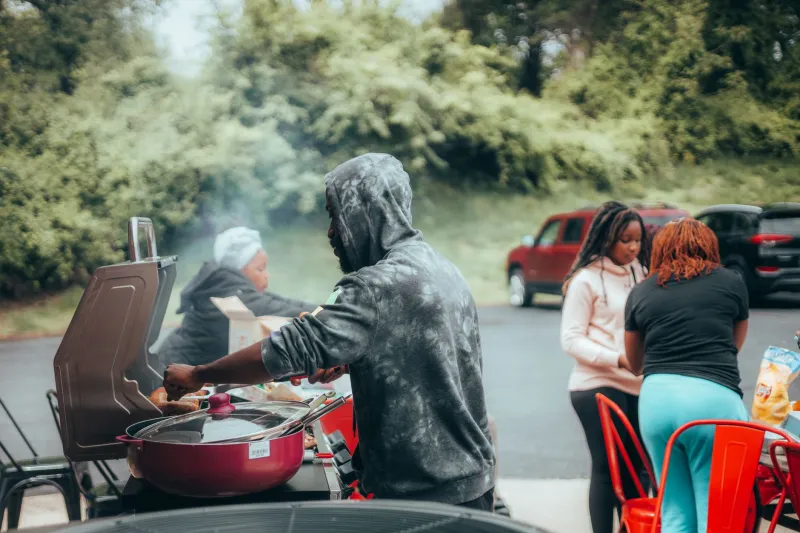
A group of friends in their thirties who are all far from family started a "Friendsgiving Eve" gathering — the Wednesday before Thanksgiving, every year, at whoever has the most space. No elaborate food. Just people. It's been seven years now. People plan their travel around it.
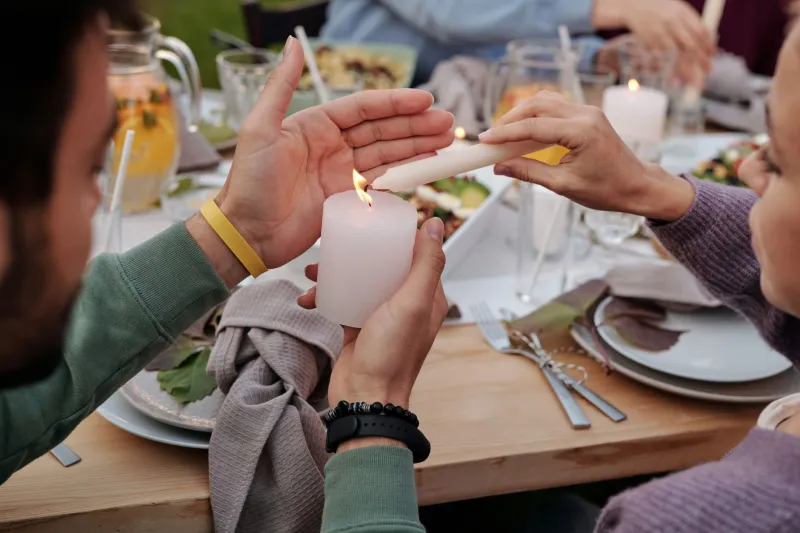
A woman in the Pacific Northwest who grew up without consistent holiday traditions started hosting a winter solstice dinner — the darkest night of the year, candles everywhere, a meal she adds a new dish to every year. She invites people who don't have anywhere else to be. The guest list has grown slowly. The ritual has started to feel, she says, like something she's been doing her whole life.
A couple in the Midwest started a spring "seed swap" — a casual Saturday in April where friends bring seeds, cuttings, and plants to trade. It's evolved into a whole-day thing with food and kids running around. It's become, without anyone planning for it to become anything, the thing that marks the beginning of warm weather for about twenty people.
None of these are ancient. None of them have a manual. All of them matter enormously to the people inside them.
The Ingredients of a Tradition That Sticks
Not every attempt at ritual takes root, and that's okay. But there are some patterns in the ones that do.
Seasonality matters. Tying a gathering to a time of year — a solstice, a harvest season, the first real day of fall — gives it a natural anchor. The calendar does some of the work for you.
Repetition is the whole point. A tradition isn't a tradition after one time. Commit to doing the same thing at roughly the same time for at least three years before you evaluate whether it's working. The meaning accumulates over time.
Let it evolve, but keep the spine. The best traditions have a core that stays consistent — the same date, the same location, the same central activity — and then everything else can change. New people can join. The food can vary. The vibe can shift. But the spine holds.
Make it easy enough to actually do. The elaborate, logistically complex gathering is the one that gets cancelled when life gets hard. Build something simple enough that you'd still do it on a difficult year.
Name it, even casually. Something interesting happens when you give a gathering a name — even a silly one. It becomes a thing that exists, rather than just a plan. "The October thing" or "our spring swap" or "the solstice dinner" — naming it makes it real.
Permission to Begin
If you're reading this and feeling the ache of the missing tradition, here's what I want to say: you don't need to wait for the right circumstances. You don't need a house or a history or a reason that would make sense to anyone else.
Pick a season. Pick a theme. Invite a small number of people. Do it once. Then do it again.
The meaning won't be there on the first try. It might barely be there on the second. But somewhere around year three or four, you'll notice that people are asking about it in advance. That they're blocking off the date. That they're telling people who weren't there about it.
That's when you'll know: you made something. Something that belongs to you and the people you love. Something that marks time in a way that matters.
That's what tsudoi is really about — not just gathering in the moment, but building the kind of gathering that becomes a landmark. Something people return to. Something that makes the year make sense.
You're allowed to build that from scratch. You're allowed to make it up as you go.
Most of the best traditions started exactly that way.