You Don't Have to Be an Expert to Be Exactly What Someone Needs
Your friend just sent you an invitation. She's been taking pottery classes for eight months — the kind she squeezes in on Tuesday evenings after work — and her studio is hosting a small showcase. There will be lumpy bowls. There will be slightly off-center vases. There will be her, nervous and proud, standing next to shelves of things she made with her own hands.
And somewhere in the back of your mind, a voice whispers: What do I even know about pottery? What could I possibly say?
That voice is lying to you.
The Myth of the Value-Added Witness
We live in a culture that has quietly convinced us that our presence only matters when we bring something to the exchange. Expertise. Connections. Feedback that's actually useful. We show up to networking events armed with business cards and elevator pitches. We attend workshops to learn. We go to dinner parties to reciprocate. Somewhere along the way, simply being there started to feel like it wasn't enough — like attendance without a contribution was almost selfish, a drain on the room.
This thinking has seeped into the way we support the people we love. We hold back from going to the open mic night because we don't know how to critique spoken word poetry. We skip the friend's first 5K because we're not runners and won't know what to say afterward. We hesitate to celebrate the colleague who just launched a small Etsy shop because we're not entrepreneurs and don't want to give advice that misses the mark.
What we're really doing, though — and this is the part nobody says out loud — is protecting ourselves from the discomfort of not being the expert in the room. And in doing so, we leave the people we care about standing alone in their most vulnerable moments.
What It Actually Feels Like to Be Witnessed
Ask anyone who has ever done something brave and public — performed, exhibited, competed, pivoted careers, started over — and they will tell you the same thing. They don't remember who gave the most insightful feedback. They remember who showed up.
There's a specific kind of courage it takes to pursue something that doesn't come with a guaranteed payoff. The friend learning watercolor at 42. The coworker who left a stable job to open a food truck. The cousin who decided to go back to school for something completely different. These people are not just chasing a hobby or a career move. They're betting on a version of themselves that isn't fully formed yet. That is terrifying. And one of the few things that makes it less terrifying is knowing that someone — even just one person — is paying attention.
Being witnessed isn't about validation in the Instagram-likes sense. It's something older and quieter than that. It's the human experience of feeling seen in your trying, not just your succeeding.
The Pressure to Pivot to Advice
Here's where a lot of us go wrong even when we do show up: we immediately feel the need to perform helpfulness. We scan for something constructive to say. We offer to introduce them to someone who might know more. We mention an article we read once. We pivot to advice because sitting in someone else's experience — without fixing or improving it — is genuinely uncomfortable.
But unsolicited expertise has a way of pulling focus. It shifts the moment from their story to your knowledge. And the person you came to support suddenly finds themselves managing your helpfulness instead of just feeling your presence.
Sometimes the most generous thing you can say after watching your friend perform an original song for the first time is: That was really something. I'm so glad I got to see it. Full stop. No notes. No "have you thought about..." Just a clean, honest acknowledgment that you were there and it mattered.
Showing Up as a Form of Belonging
There's something in the Japanese concept of tsudoi — gathering, coming together — that captures what this kind of presence is really about. It's not about the transaction of the gathering. It's about the act of choosing to be in the same space as someone, to say with your body: your thing is worth my time and attention.
In the US, we tend to undervalue this. We're a culture that prizes doing, producing, contributing. But gathering around someone else's dream — with no agenda other than to witness it — is its own kind of contribution. It builds the kind of community that doesn't require you to be useful to belong.
Think about the last time someone showed up for you in that way. Not because they had advice. Not because they owed you a favor. Just because you were doing something that mattered to you and they wanted to be there. Chances are, you still think about it.
The Unexpected Bond That Forms
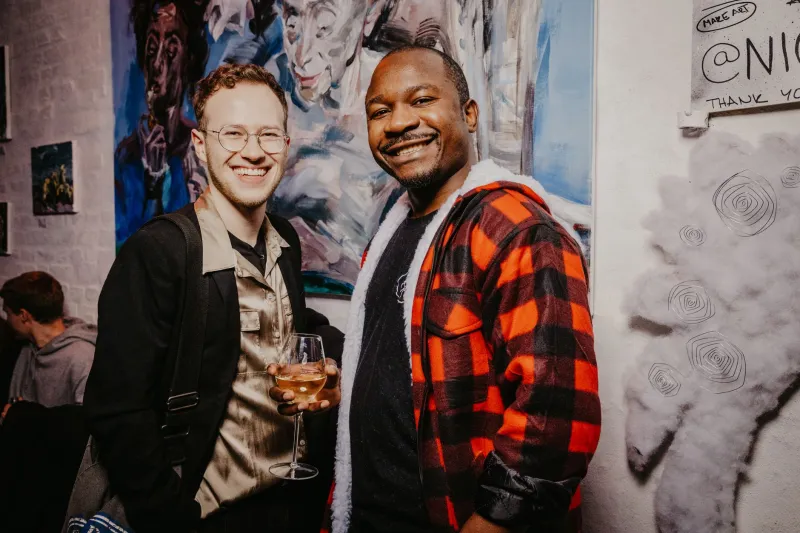
Here's the part that surprises people: showing up for someone else's dream almost always brings you closer to them in ways that ordinary socializing doesn't. When you sit in a folding chair at an amateur art show and watch your friend explain their work to strangers, you see something about them that you wouldn't see over dinner. You see their hope. Their nervousness. The way they light up when someone lingers in front of something they made.
That kind of intimacy is rare. And it doesn't require you to know anything about art.
You also, quietly, give yourself something. You get reminded that people are out here doing hard, uncertain, beautiful things. You get pulled out of your own preoccupations for an afternoon. You get to feel, maybe, a little inspired.
How to Actually Do This
If you're someone who has been waiting until you feel qualified to show up — here's a gentle push:
Go to the thing. The showcase, the open mic, the first farmers market booth, the launch party for the thing you don't fully understand. Clear your schedule and go.
Leave the feedback at home. Unless someone specifically asks, your job is to be a warm body in the room, not a consultant. "I'm so proud of you" is a complete sentence.
Say something specific. You don't need expertise to notice. The blue glaze on that bowl is really beautiful. The part where you talked about your grandmother — I felt that. Specific observations are more meaningful than general praise.
Follow up. Text them the next day. Ask how they're feeling about it. The showing up doesn't end when you leave the room.
The Gathering That Doesn't Ask You to Perform
Maybe the most radical thing Tsudoi stands for is the idea that gathering doesn't have to be transactional. You don't have to be impressive to belong. You don't have to add value to matter. Sometimes the most beautiful thing you can do for someone you love is just take up space in their corner of the world — awkwardly, warmly, without an agenda.
Your friend's lumpy bowl deserves an audience. And you, just as you are, are exactly the right person to be in it.