Stop Hiding the Chaos: How Your Unfinished Life Becomes the Truest Kind of Welcome
There's a particular kind of exhaustion that comes from performing okayness. You know the one — where you clean the apartment before a friend comes over not because you care about the dust, but because you care about what the dust says about you. Where you wait until things are better, calmer, more figured out before you let people in. Where vulnerability feels like a liability instead of a bridge.
We've been conditioned to believe that the polished version of ourselves is the one worth sharing. And yet, if you think about the people in your life who feel the most magnetic — the ones you genuinely want to be around — they probably aren't the ones who have it all together. They're the ones who told you the truth when you asked how they were doing.
The Myth of the Perfect Entry Point
Somewhere along the way, we absorbed the idea that we need to arrive at our own lives before we can really invite anyone in. Get the promotion, fix the relationship, lose the weight, find the clarity — then you'll be ready to show up fully. Then you'll have something worth offering.
But that entry point is a moving target, and most of us never quite reach it.
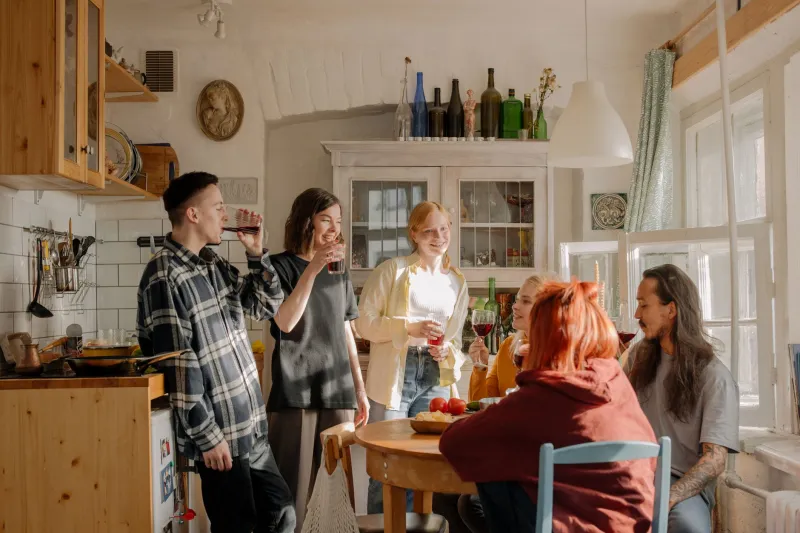
What we miss while we're waiting is the actual texture of connection. The stuff that happens in the in-between. The coffee date where someone admits they've been crying in their car before work. The group chat where someone finally says I'm not doing great, actually. The dinner party where the host burns the garlic bread and everyone relaxes because suddenly the evening isn't a performance anymore.
Imperfection creates permission. When you admit you're still figuring it out, you give everyone else in the room license to do the same.
Why People Are Tired of the Highlight Reel
We are, collectively, in the middle of a slow-motion rejection of curated perfection. It's showing up everywhere — in the rise of "deinfluencing," in the cultural appetite for unfiltered content, in the way people talk about social media fatigue. There's a growing hunger for the real thing, and people can tell the difference.
This isn't just a trend. It's a correction.
For years, social media handed us a powerful tool for self-presentation and we used it, reasonably enough, to show our best angles. But somewhere in the process, connection got filtered out along with the blemishes. We ended up with audiences instead of communities. Followers instead of friends. Validation instead of belonging.
The people who are cutting through the noise right now — in their real lives and online — aren't the ones with the most polished brand. They're the ones willing to say: this is where I actually am. They're the ones who tsudoi — who gather people to them — not because they've built a perfect life, but because they've built an honest one.
The Counterintuitive Magnetism of Vulnerability
Here's what's strange and kind of wonderful: the more openly you carry your chaos, the more people want to be near you.
It feels backward. We assume that admitting struggle will push people away — that others want the version of us who has answers, not questions. But in practice, the opposite tends to happen. When you share something real, something unresolved, something that doesn't have a tidy lesson attached yet, people lean in.
Psychologists call this the pratfall effect — the idea that competent people actually become more likable when they reveal a flaw or make a mistake. But you don't need a study to confirm what you've already experienced. Think about the last time someone was honest with you about their struggle. Didn't you feel closer to them immediately? Didn't something in you soften?
Vulnerability is connective tissue. It's the thing that turns acquaintances into actual friends.
What It Actually Looks Like to Let People In
This isn't a call to overshare or perform your pain for an audience. There's a difference between authentic vulnerability and emotional dumping, and it's worth knowing where that line is.
Real openness is less about what you share and more about why you share it. It's the difference between saying I'm struggling as a way to invite closeness versus as a way to demand attention. It's the difference between letting someone see your unfinished kitchen renovation and your unfinished sense of self.
Some practical ways this actually plays out:
- Answering honestly when someone asks how you're doing. Not a novel, not a spiral — just the real answer. Honestly, it's been a weird week. That's enough.
- Hosting before you're ready. Invite people over when the apartment isn't perfect. Order pizza instead of cooking. Let the evening be easy.
- Saying the thing you're afraid makes you look bad. The career pivot that didn't work out. The friendship that faded. The goal you quietly abandoned. These aren't failures — they're evidence of a life actually being lived.
- Asking for help before you're desperate. Letting people contribute to your life is a gift you give them, not a weakness you're exposing.
Your Mess Is the Invitation
There's a Japanese concept at the heart of what Tsudoi is about — the idea of gathering, of coming together in a way that feels intentional and warm. But gathering isn't something that happens in perfected spaces. It happens in lived-in ones. Around tables with mismatched chairs. In text threads full of typos. In friendships that started because someone admitted they had no idea what they were doing.
Your unfinished self isn't a liability you need to resolve before you can connect. It's the very thing that makes connection possible.
The people who are meant to be in your life — your actual people — aren't waiting for you to get it together. They're waiting for you to stop pretending you already have.
So stop cleaning up before you let anyone in. Stop waiting for the chapter where everything makes sense. Stop saving the real version of yourself for some future moment when it feels safer to be honest.
You are most magnetic exactly as you are right now: mid-process, a little uncertain, genuinely trying. That's not a flaw in your invitation. That's the whole point of it.


