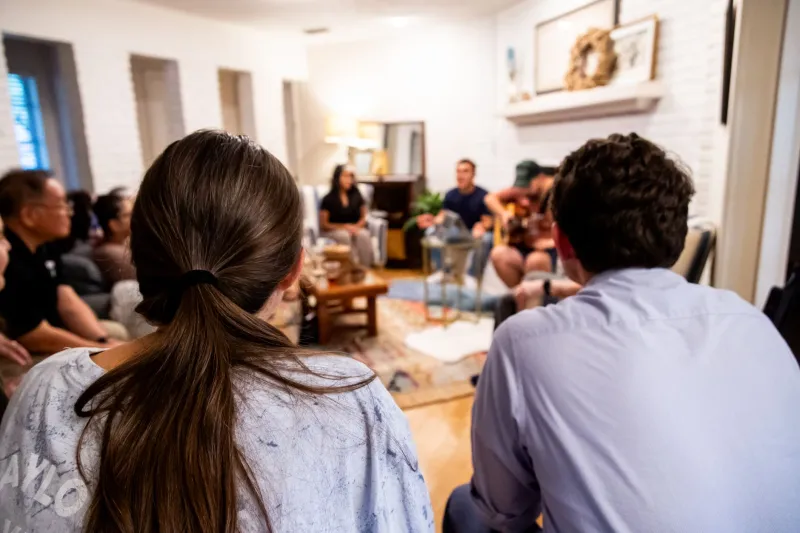
Nobody Planned This (And That's Exactly Why It Was Perfect)
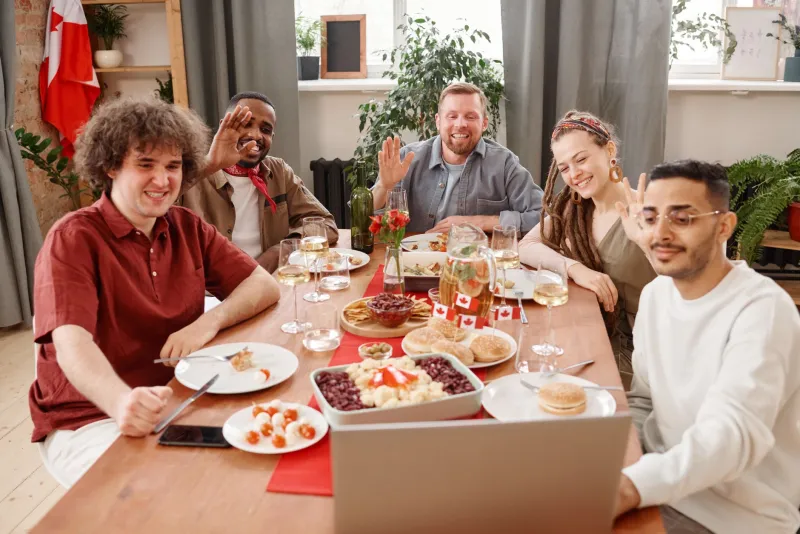
It started because someone's flight got canceled.
That's how Renata, a middle school art teacher in Columbus, Ohio, describes the evening that became one of her favorite memories. Her friend Deb was stranded, her apartment was between grocery runs, and somehow — within two hours — six people were crammed around her kitchen table eating pasta with whatever was in the pantry and laughing until somebody cried. "There were no decorations. My sink had dishes in it. I was wearing the sweatpants I'd had on all day," Renata told us. "And it was the best night I'd had in years."
She's not alone in that feeling. Ask almost anyone to name a gathering that actually mattered to them, and odds are it wasn't the dinner party they spent three days prepping for. It was the Sunday afternoon that turned into an accidental cookout. The after-work drink that became a four-hour conversation. The snow day that somehow pulled the whole block together.
So what's going on? Why do the unplanned moments so often outshine the curated ones?
The Pressure Drop
Here's the thing about a perfectly planned event: everyone knows it's a performance. The host is performing hospitality. The guests are performing gratitude. There's a script, even if nobody wrote it down. And scripts, however comfortable, keep people at a certain distance from each other.
When something is spontaneous, that script disappears. Nobody's playing a role because nobody had time to rehearse one. The host is real — slightly frazzled, maybe apologetic about the mess — and that realness gives guests permission to be real too. Psychologists call this "self-disclosure reciprocity": when someone shows you their unguarded self, you instinctively do the same. Vulnerability, it turns out, is contagious in the best possible way.
There's also the element of shared surprise. When a gathering isn't planned, everyone in the room knows they chose to be there, in that moment, with those specific people. That choice feels significant. It carries a kind of low-key intimacy that a save-the-date can't manufacture.
What We're Actually Afraid Of
If unplanned gatherings are so great, why do so many of us resist them? Why does the idea of someone stopping by unannounced send us into a quiet panic?
Honestly? Because we've been sold a very specific image of what hospitality looks like. Matching linen napkins. A cheese board with the little honey dipper. Ambient lighting. That image is everywhere — on Pinterest, in home décor ads, in the aspirational corners of social media — and it has quietly convinced us that our homes and our lives need to be presentation-ready before they're worth sharing.
But that standard is both exhausting and isolating. When the bar for connection is a curated aesthetic, most of us opt out entirely. We wait until the apartment is cleaner, until we have time to actually cook something, until life feels less chaotic. And we wait, and wait, and the spontaneous invitations never get extended.
The unplanned gathering asks you to let go of that standard. Not permanently, not for every occasion — but sometimes, just to let people in as-is.
How to Build a Life That's Ready (Without Being "Ready")
Embracing spontaneity doesn't mean living in chaos or ignoring your own comfort. It means making small, intentional choices that lower the barrier to entry — for yourself and for the people you love.
Keep a loose pantry. You don't need to be stocked for a dinner party, but a few reliable staples — pasta, canned tomatoes, good olive oil, snacks that keep — mean you can always offer something. Food is an anchor. Even a bowl of chips on the table changes the energy of a room.
Reframe the mess. This one's harder, but it matters. Try to see the laundry on the couch not as evidence of failure but as proof that real life happens here. Most people aren't looking at your clutter — they're looking at you, wondering if you're glad they came. Show them you are.
Say yes before you talk yourself out of it. The next time someone texts "are you around?" or asks if they can swing by, resist the urge to mentally inventory your home before answering. Just say yes. See what happens.
Have a go-to move. Some people are great at the impromptu gathering because they've got one reliable trick: the friend who always orders pizza, the neighbor who pulls out a deck of cards, the coworker who suggests a walk. You don't need a whole repertoire — just one move that signals we're doing this, and it's going to be fine.
The Memories That Stick
There's a reason we remember the unplanned moments so vividly. Neuroscience has a partial answer: novelty and mild surprise enhance memory consolidation. But beyond the brain science, there's something simpler at work. Those moments remind us that life is actually happening — not in the highlight reel, but in the Tuesday night scramble, in the canceled flight and the pantry pasta and the sweatpants you didn't bother changing out of.
Tsudoi, the idea of gathering, has never really been about perfection. It's about presence. It's about the willingness to say come over, it's not fancy, but come. It's about trusting that the people who matter to you don't need a stage set — they just need you to open the door.
Renata kept in touch with everyone from that night. One of those people, a friend-of-a-friend she'd only met twice before, became someone she talks to nearly every week. "I never would have known her if Deb's flight hadn't been canceled," she said. "And I almost didn't let them come over because my apartment was a mess."
Almost.
Don't almost. Let them in.