Your House Doesn't Have to Be Ready for Company — Just Open
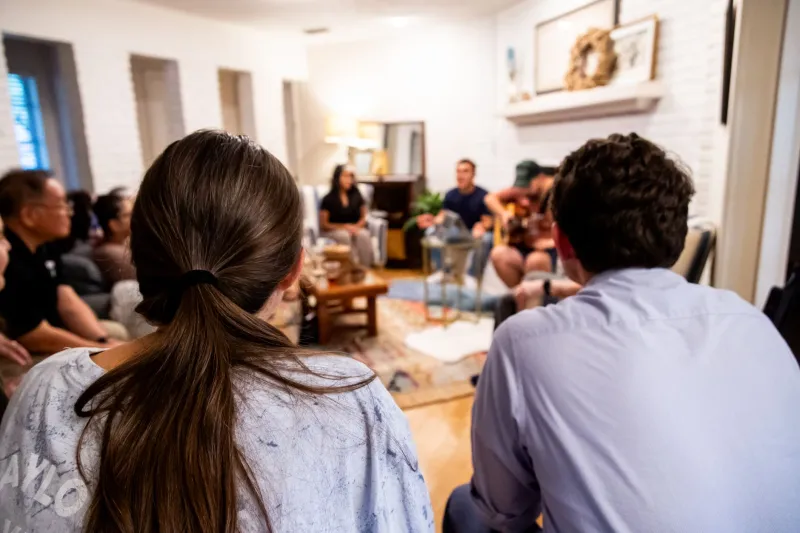
Somewhere between the rise of food influencers and the era of the perfectly curated dinner party Instagram post, a lot of us quietly stopped having people over. Not because we didn't want to. Not because we ran out of friends. But because the bar — the imaginary, self-imposed, completely unrealistic bar — got so high that the whole idea started to feel like a project instead of a pleasure.
Maybe you've been there. You think about texting a few people to come over on Saturday, and then you look around at your apartment and do the math. The kitchen table only seats four. The couch has a throw blanket over it for a reason. You haven't deep-cleaned the bathroom since — well. You order takeout alone instead and tell yourself you'll host when things are more together.
Here's the thing: things are never going to be more together. And waiting for that moment means the people you love keep eating dinner without you.
The Myth of the Perfect Host
American hosting culture has a complicated relationship with effort. On one hand, we love the idea of effortless entertaining — the host who makes it look easy, who floats through a beautifully lit room with a tray of drinks and somehow also has a three-course meal going. On the other hand, we've completely absorbed the message that pulling that off requires money, space, skill, and probably a subscription to at least two lifestyle newsletters.
Pinterest didn't invent this pressure, but it definitely turned up the volume. So did Instagram, TikTok, and every "hosting haul" video that makes it look like you need a specific set of linen napkins and artisan cheese boards before you can invite people into your home.
The result? A generation of people who genuinely want to connect but have convinced themselves they're not equipped to make it happen. So nobody hosts. Everyone waits. And the loneliness epidemic keeps getting worse.
What Actually Happens When You Just Open the Door
There's a woman in Portland — let's call her Mara — who started hosting monthly potlucks in her 600-square-foot apartment two years ago. Her dining table is actually a folding table she found at a garage sale. Her chairs don't match. The first time she had people over, she burned the garlic bread and ran out of wine glasses so people drank out of mugs.
She almost didn't invite anyone back.
But people kept asking when the next one was.
What Mara figured out — slowly, and a little reluctantly — is that the imperfection was doing some of the work for her. When she wasn't performing the role of Perfect Host, she was just herself. And when she was just herself, so was everyone else. The mismatched mugs became a running joke. The folding table became legendary. People brought food they actually liked instead of what they thought they were supposed to bring. The gatherings got louder and longer and more honest.
"I think people were relieved," she said. "Like they didn't have to be impressive either."
That's the quiet alchemy of imperfect hosting. When you drop the performance, you give everyone else permission to do the same.
The Real Cost of Waiting Until You're Ready
Perfectionism has a sneaky way of framing itself as consideration. I don't want to inconvenience anyone with my small space. I don't want to serve bad food. I want to make sure it's a good experience for my guests. These thoughts feel generous, but they're often just fear wearing a polite disguise.
The truth is, most people aren't coming to your home to evaluate it. They're coming because they were invited. Because someone thought of them and wanted them there. That's the whole thing. That's the entire gift.
A crowded living room where everyone has to sit on the floor is still a living room where people are together. Pasta from a box, eaten off paper plates, can still be the meal someone remembers years later — not because of what was served, but because of what was said around it.
Every week you wait for the right moment is a week you're not gathering your people. That's the real cost. Not the risk of an awkward silence or a mediocre appetizer. The cost is the time, and time is the one thing nobody gets back.
Small Moves That Change Everything
If the idea of hosting still feels overwhelming, start smaller than you think you need to. Here's what that can actually look like:
Invite two people, not ten. You don't need a party. You need a gathering. Two friends, a bottle of wine, and whatever you were already going to make for dinner is enough. It's more than enough.
Tell the truth upfront. "My place is small and I'm not a great cook, but come over anyway" is a complete invitation. It sets expectations honestly and takes the pressure off everyone involved, including you.
Let people bring things — and mean it. Not the performative "oh you don't have to" while secretly hoping they bring dessert. Actually ask for what you need. People like having a role. It makes them feel like they're part of it, not just guests being served.
Embrace the awkward pause. Silences happen. They're fine. You don't have to fill every one of them. Sometimes the most real moments in a gathering happen right after the conversation stops and before it starts again.
Lower the cleanup standard. Your bathroom doesn't need to be spotless. It needs to have soap and a clean hand towel. That's it. Done.
Gathering Is the Point
Tsudoi — the name itself means to gather, to come together. And the thing about gathering is that it doesn't require a stage set. It just requires someone willing to say come over.
The most memorable homes you've ever been in probably weren't the most polished ones. They were the ones where you felt like you could put your feet up. Where the host wasn't performing, so you didn't have to either. Where something about the whole imperfect scene made you feel, weirdly, completely at ease.
That's not an accident. That's what happens when someone cares more about the people in the room than the impression the room makes.
You don't need a bigger apartment. You don't need better furniture or a signature cocktail or the ability to make homemade bread. You need a door you're willing to open and people you want on the other side of it.
Everything else is just details. And honestly? The details are way less important than you think.


