The Gold in the Crack: How to Mend a Friendship Without Pretending It Never Broke
Most friendships do not end with a dramatic fight. They end with a text that goes unanswered, a birthday remembered too late, a joke that lands wrong and then never gets discussed. The bond cracks. We call it drift, or life, or growing apart, and we quietly move the person to the part of our phone we do not scroll to anymore.
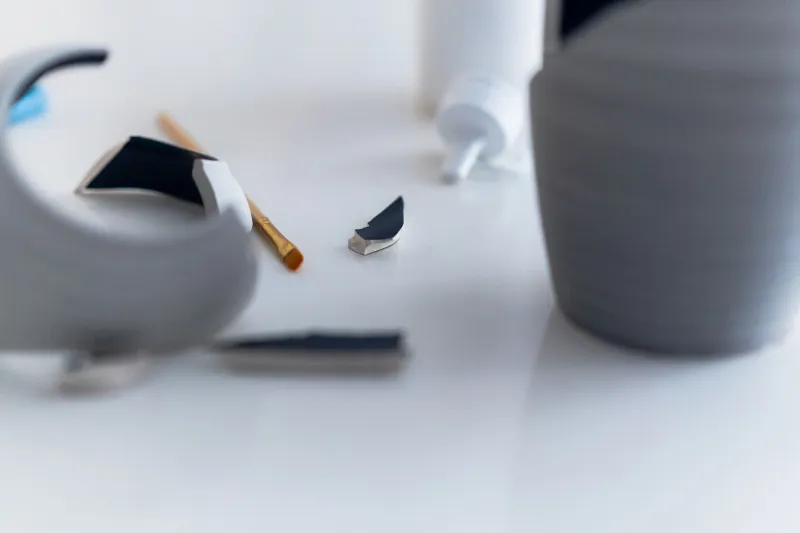
Kintsugi—the Japanese practice of repairing broken pottery with lacquer and gold—offers a different ending. It does not hide the break. It traces it. The bowl is not returned to its original condition; it becomes a record of what happened and what was done about it. Friendship can work the same way, but only if we stop treating repair as a fantasy and start treating it as a process.
This is not an argument for staying in every relationship. Some bonds break because they should. If there is abuse, cruelty, or a pattern of harm, repair is not your obligation. The kintsugi frame is for the friendships that fractured over something human—a careless comment, a missed season, a jealousy you did not know how to name. The ones that still have a pulse under the hurt.
Start with an honest inventory
Before you send the message, get clear about what you are repairing. Was it one bad night, or a slow erosion? Do you miss the person, or do you miss who you were together? Are you hoping to return to the old friendship exactly as it was, or are you open to a different shape?
Write down what actually broke. Not the whole history—just the thing you would need to address if you sat across from them. Then ask whether you are willing to hear their version. Repair requires two people who can tolerate being partly wrong. If you are only looking for a verdict, you are not ready for the gold.
The conversation will be awkward. Have it anyway.
Do not ambush them in a group chat. Do not send a paragraph at midnight and demand an answer by morning. Pick a low-stakes setting where you can both leave: a walk, a coffee, a phone call if distance makes that necessary. Say something simple: I have been thinking about you, and about something that happened between us. Would you be open to talking?
That is the whole invitation. No speech yet. No list of grievances. The goal of the first conversation is not to solve the friendship. It is to find out whether both of you want to try.
When you do talk, use plain language. I felt dropped. I was embarrassed. I did not know how to come back. Avoid the phrase you always, which turns a moment into a character flaw. And when they speak, listen for the part that makes you defensive. That is usually where the real information is.
An apology needs a spine
A repair apology is specific. It names what you did, acknowledges the impact, and does not add a but. I am sorry I disappeared after you got sick. I was scared, and I made it about me. That is different from I am sorry if you felt hurt, which is a sentence that apologizes for their feelings instead of your behavior.
You can also ask what would help. Not what will make this go away—what would help them trust you again. They may not know. They may ask for something you cannot promise. That is information too. A real apology can survive an honest answer.
Rebuild in small, unglamorous increments
Repair is not a single conversation. It is a series of ordinary Tuesdays. Start with low-stakes contact: a walk, a voice memo, a coffee that lasts forty minutes instead of four hours. Do not rush back to the intimacy that took years to build. You are not restoring an old house; you are testing the foundation.
Expect the friendship to feel different. It may be more careful for a while. It may have new boundaries. It may include a topic you both agree not to relitigate. That is not failure. That is the gold line—visible, deliberate, and part of the object now.
The gold is proof, not decoration
A repaired friendship can be stronger, but not because the break was good. It can be stronger because you both learned how to handle a break. You learned that conflict does not have to be the end. You learned what the other person needs when they are hurt. You learned that you can be wrong and still be loved.
That is the radical part. Not the bowl. The decision to pick up the pieces and ask whether the other person wants to hold the glue with you. If they do, move slowly. If they do not, let the bowl be beautiful on its own. Either way, you will have practiced the thing we are all here to practice: gathering what is broken and deciding what it can become.